Immune age simulator
YoungerMove the slider to see how a conceptual immune-aging pressure can reduce stemness, increase exhaustion burden, and reshape tumor-directed output.
Atlas-guided immunology, reimagined as a living map
This educational prototype transforms the provided atlas concept image into a luminous interactive website. Follow CD8+ T cell states, compare markers, decode exhaustion signatures, and test therapeutic design logic without treating it as medical advice.
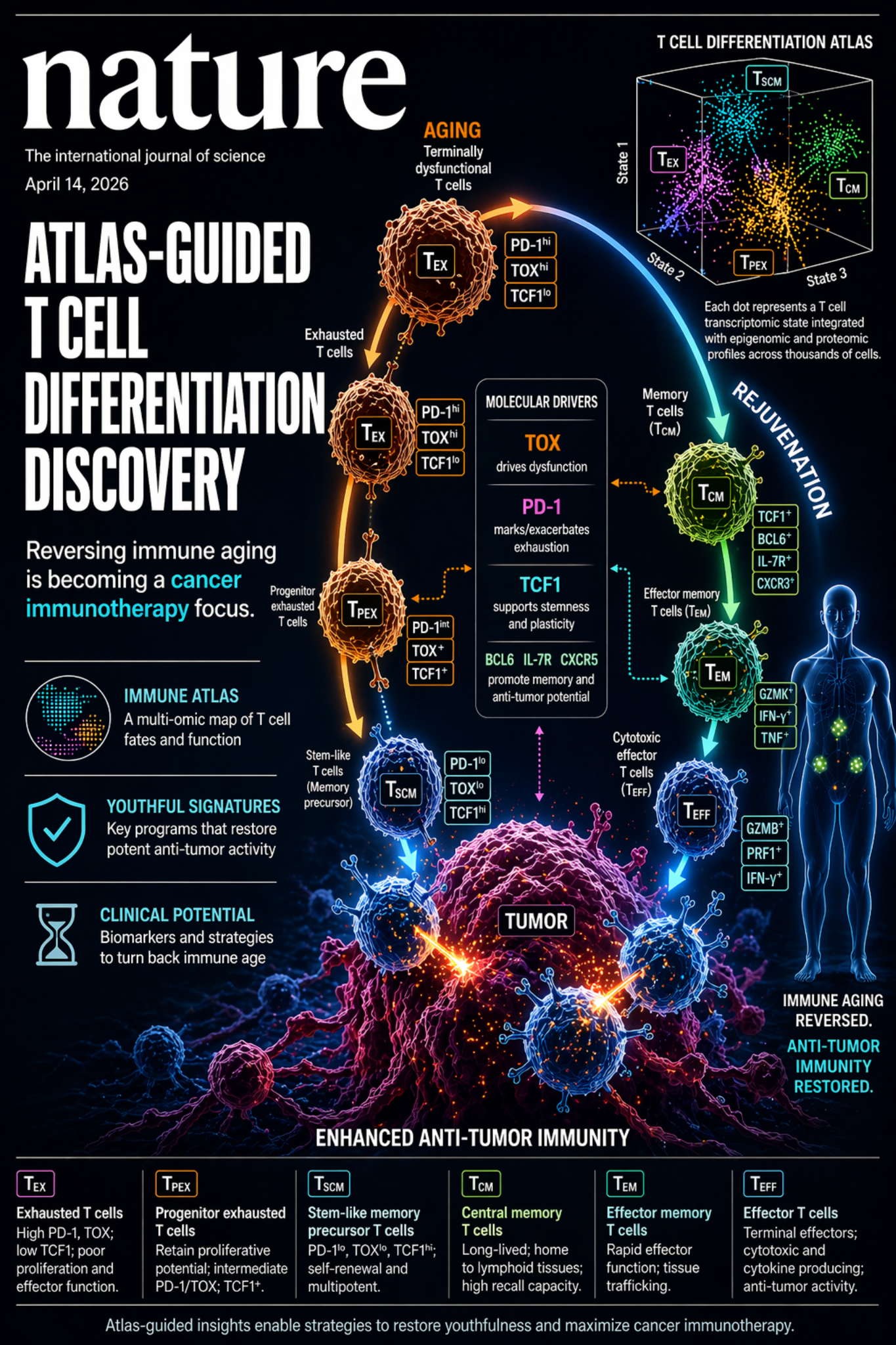
Cell state is not a single marker. It is a coordinated pattern across transcription, chromatin, proteins, tissue context, and time.
Designed for science communication, classes, lab meetings, and immunotherapy concept onboarding.
Educational only. It is not a diagnostic system, treatment selector, or substitute for clinical guidance.
Differentiation journey
Click any cell state to reveal its marker logic, function, and what the image suggests about aging or rejuvenation.
Multi-omic atlas viewer
Filter clusters, hover points, and watch how exhaustion, memory, and effector programs separate in a simplified transcriptomic/proteomic landscape.
Molecular drivers
Use the driver cards to see how the image's labels fit together: TOX, PD-1, TCF1, BCL6, IL-7R, CXCR5, granzymes, perforin, and cytokines.
Active driver
A transcriptional regulator associated with exhaustion programs, especially under chronic antigen exposure.
Interactive learning lab
These modules make the abstract differentiation map more tangible. They are intentionally simplified for education.
Move the slider to see how a conceptual immune-aging pressure can reduce stemness, increase exhaustion burden, and reshape tumor-directed output.
Choose a small marker pattern and the decoder will suggest the closest teaching-state match.
Assemble a conceptual study design from omics layers and tissues, then review the resulting workflow.
State library
Use these cards as a fast teaching handout. Each one connects markers, function, and the central aging/rejuvenation theme.
Translational design logic
The site frames immunotherapy design as a state-management problem: expand useful persistence, limit terminal dysfunction, and preserve cytotoxic output where it matters.
Support TCF1-rich memory-like cells that can keep the response renewable instead of spending every cell into terminal exhaustion.
Checkpoint blockade aims to reduce inhibitory signaling so T cells can attack tumors, but immune activation can also produce inflammatory side effects.
Effector programs such as granzyme, perforin, and cytokine production represent the anti-tumor action arm of the map.
Tissue site, antigen persistence, tumor microenvironment, and prior therapy influence whether a marker pattern is helpful, harmful, or ambiguous.
Knowledge check
Answer a few short questions. The feedback is immediate, and you can reset the quiz anytime.
Glossary
Search by marker, cell state, or concept.
Sources and use
This site is based visually on the prompt image and grounded conceptually in peer-reviewed immunology and NCI educational material. It is not an official Nature page and it is not clinical guidance.